Guides
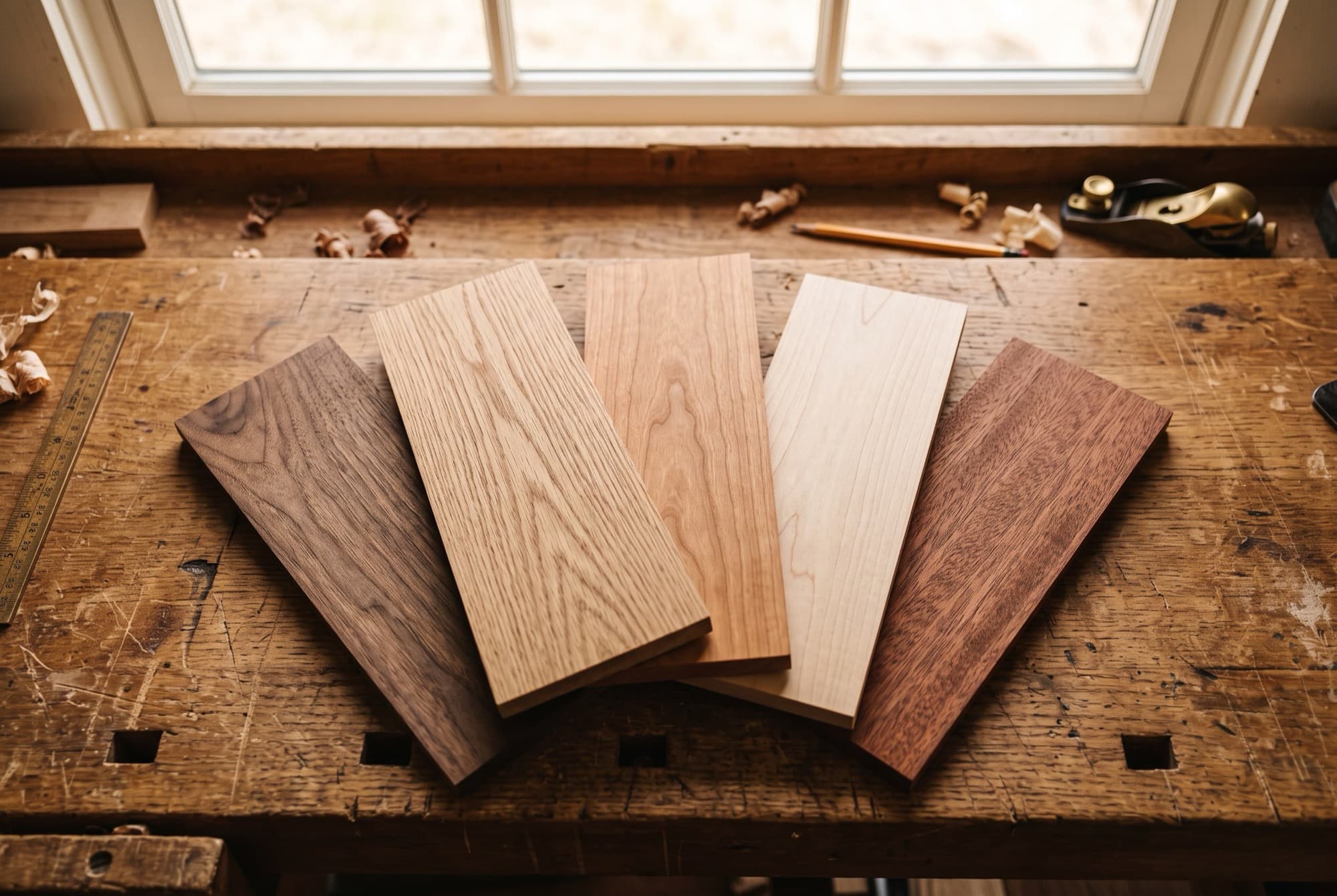
How to Choose the Right Wood Species for Your Custom Furniture
Walnut, oak, maple, or cherry? A working guide to hardness, wood movement, color over time, and honest cost per board foot, from the shop floor.
5 min read
Cabinetry
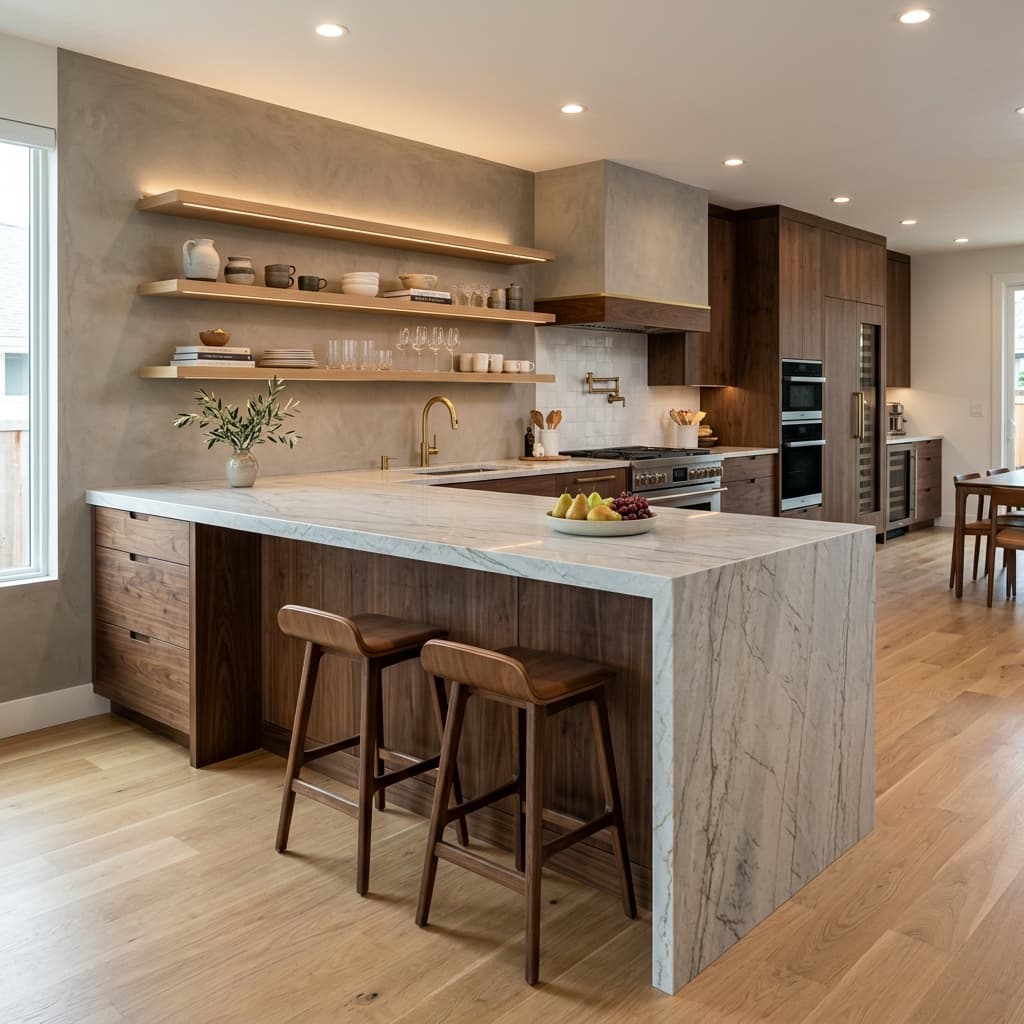
A kitchen island crowned with a four-inch hard-maple end-grain butcher block on a hand-painted base. A true work surface you can carve on for decades.
The commission
The clients cook constantly and wanted an island they could actually cut on, not a decorative slab they'd be afraid to mark. We built the top as a four-inch-thick end-grain butcher block in hard maple: hundreds of individual blocks stood on end and glued so the knife meets the fibers head-on, the configuration that self-heals and keeps an edge sharp.
End-grain construction moves more than most tops, so the block floats on the cabinet base with elongated fasteners that let it breathe through the seasons without splitting. The base is built from poplar and cabinet-grade plywood, face-framed and hand-painted in a warm off-white that sets off the maple. One end carries a bank of deep drawers; the other, an open shelf for boards and bowls. We finished the top with food-safe cutting-board oil and a beeswax paste the owners can renew themselves in minutes. It's a piece of equipment as much as furniture, built to be used hard and kept for good.
From the journal
The thinking behind this piece, written up at the bench.
Walnut, oak, maple, or cherry? A working guide to hardness, wood movement, color over time, and honest cost per board foot, from the shop floor.
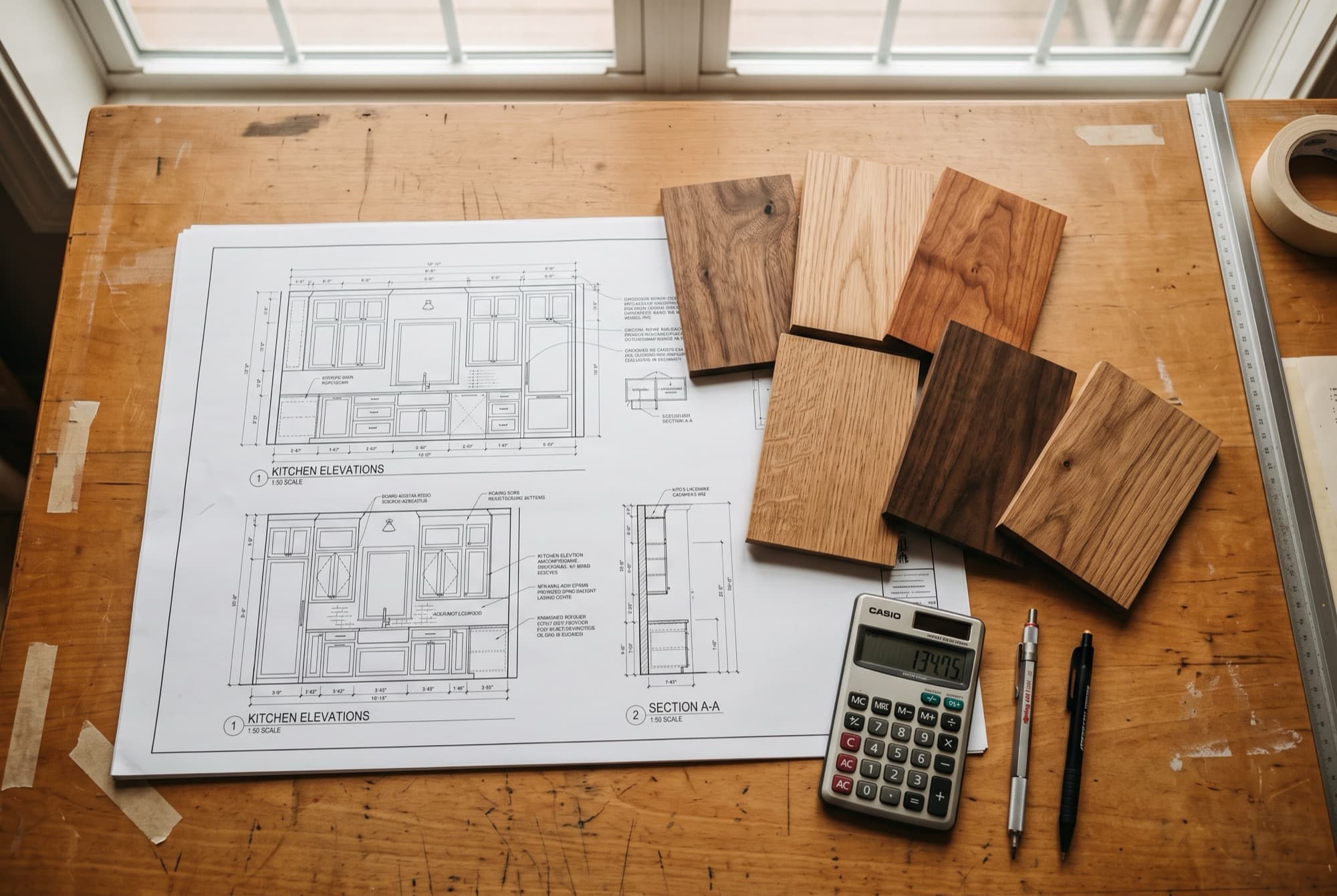
Real linear-foot ranges, what actually drives the number, and the honest cases where semi-custom is the smarter buy, from a shop that builds custom.
Start a commission
The estimator opens on cabinetry in maple — set the size and see a real range in seconds. No email, no sales call.