Cabinetry
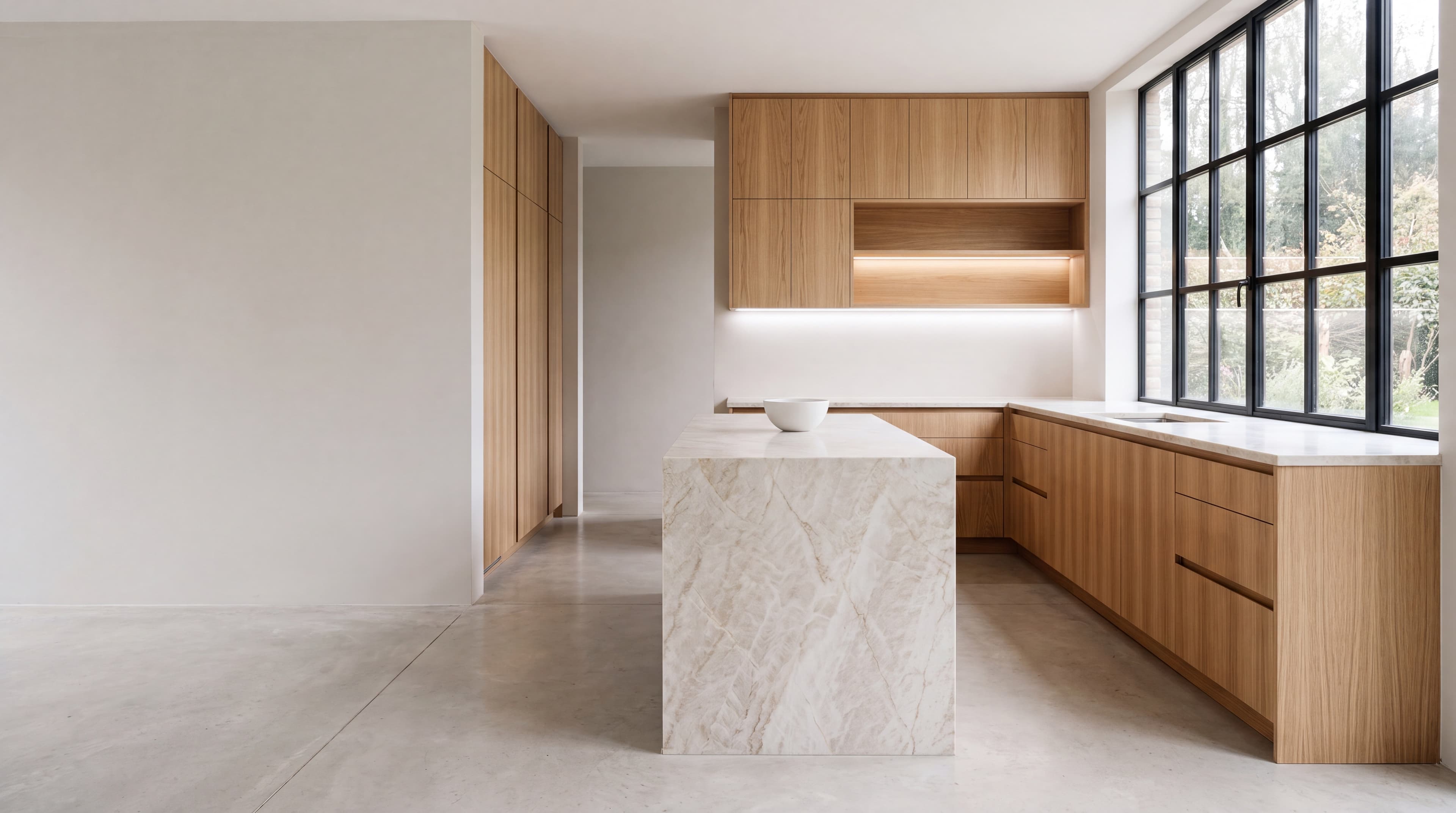
European Rift Oak & Quartzite Kitchen
Full European frameless cabinetry in vertical rift-sawn white oak with Taj Mahal quartzite waterfall island and GOLA handleless channels.
Vertical Rift-Sawn White Oak · Taj Mahal Quartzite2025
Guides
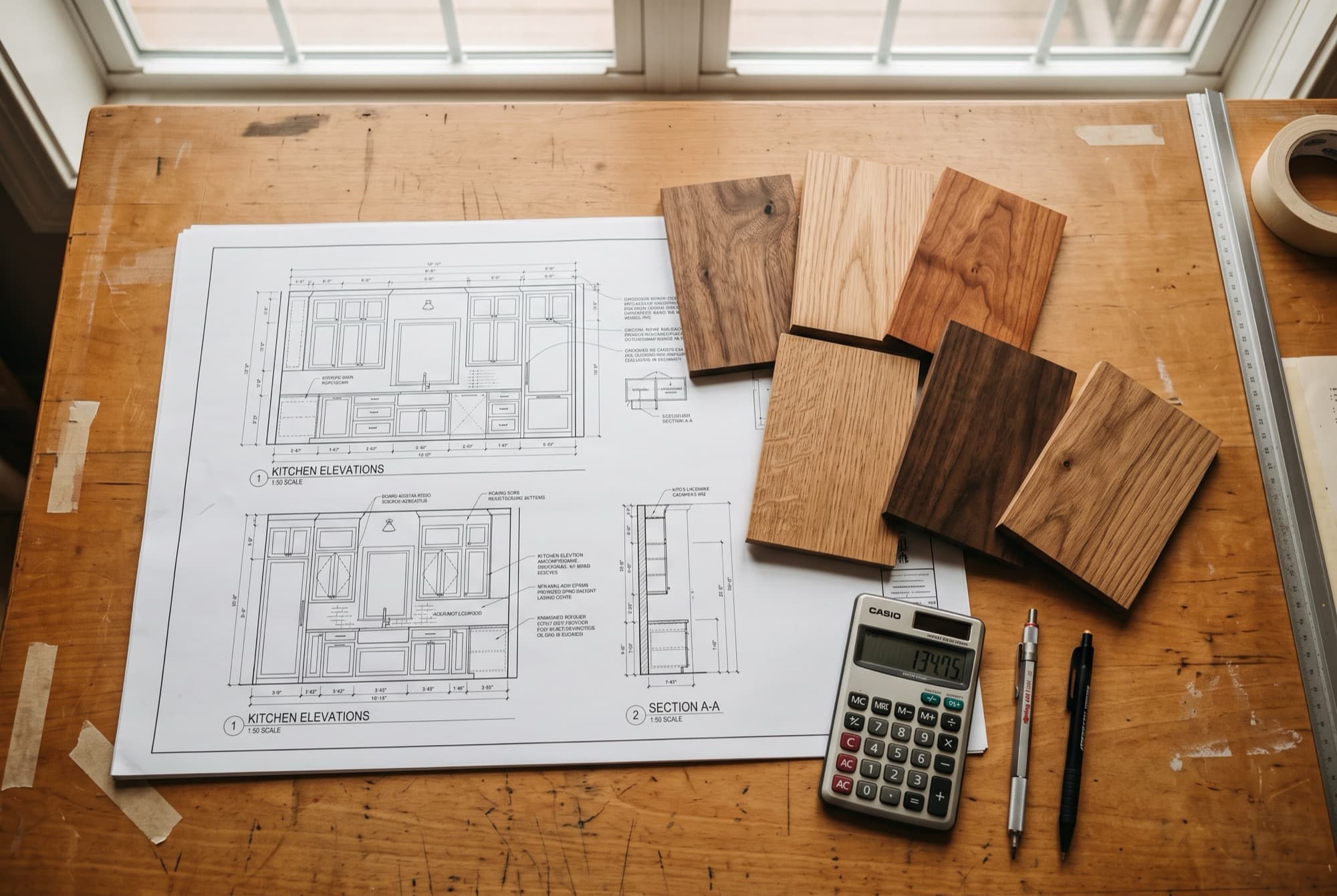
Cabinetry pricing is deliberately murky, and it works against you. Showrooms quote in ways that are hard to compare, "custom" means five different things depending on who is saying it, and the number that matters, what your finished kitchen costs installed, rarely appears until you are deep in the process. We build fully custom cabinetry, and we would still rather you walk in understanding the real math than sign something you do not follow. Here is how the money actually works.
Cabinetry sells in three broad tiers, usually priced per linear foot of cabinetry (measured along the wall run).
Stock cabinetry is mass-produced in fixed sizes and finishes, flat-packed or pre-assembled. Figure roughly $100 to $300 per linear foot. It is the big-box and much of the online market. You take the sizes offered and fill gaps with filler strips.
Semi-custom starts from standard cabinet lines but lets you modify sizes, door styles, and finishes within a catalog of options. Call it $200 to $650 per linear foot depending on brand and choices. This is the middle of the market, and for a lot of kitchens it is genuinely the right answer, which we will come back to.
Full custom, what we do, means the cabinets are designed and built for your room with no size constraints, any species, any door style, any finish, any joinery. Realistically that runs from around $500 per linear foot for a restrained build to well past $1,200, and specialty work goes higher. That is a wide band on purpose, because "custom" is exactly where the choices you make swing the price.
When two custom quotes differ by thousands, it is almost always these levers, not somebody's markup.
Box material. The carcass is where quiet money lives. A plywood box (typically 3/4-inch veneer-core hardwood plywood) costs more than particleboard or MDF and is stronger, lighter, and holds screws and hardware far better over decades. We build in plywood as standard because a cabinet is only as good as the box behind the pretty door, but it is a real cost difference and worth understanding.
Door style and overlay. The door is the single biggest visual and cost driver. A flat slab door is the least expensive to make. A five-piece shaker door is the sensible middle. Intricate raised-panel or mitered doors cost more in material and labor. And the overlay matters enormously: full-overlay and partial-overlay doors sit on the face of the cabinet and are relatively forgiving, but inset doors, which sit flush inside the frame, demand tight, consistent reveals and far more fitting labor. Inset is beautiful and it is reliably one of the most expensive choices you can make.
Finish. A clear oil or a simple stain is one price. A painted finish is more, because paint demands flawless surface prep and every imperfection shows. Specialty finishes, glazes, distressing, multi-step color, cost the most of all. Finish can easily be 20 to 30 percent of a cabinetry budget.
Hardware. This is where clients are most surprised, so here are real numbers. Good soft-close hinges (Blum and similar) run roughly $8 to $15 each, and a kitchen has a lot of doors. Quality undermount, soft-close drawer slides are commonly $30 to $60 per pair. Dovetailed solid-maple drawer boxes cost more than stapled melamine ones and last generations longer. Add pulls and knobs on top. Across a full kitchen, hardware alone routinely reaches four figures, and it is money well spent because it is the part you physically touch every day.
Install complexity. Old houses with out-of-square walls and sloping floors, tall stacked cabinetry, integrated appliance panels, and stone that has to land on a dead-level run all add labor. A clean rectangular room installs faster than a galley with three corners and a bumped-out chimney.
A custom quote is not one number, it is a stack of decisions. Change the door from inset to full-overlay and the finish from painted to clear-oiled white oak, and the same kitchen can move by a third without touching the footprint.
We build custom for a living, and we will still tell certain clients to buy semi-custom. It is the right call more often than a custom shop usually admits.
Where custom truly pays off is the opposite of all that: a room with awkward geometry, a specific species or finish you cannot get from a catalog, furniture-grade details, integrated pieces that have to look built-in because they are, and a plan to keep the kitchen for twenty-plus years. When the room fights back or the vision is specific, custom stops being a luxury and becomes the only thing that actually fits.
Cabinetry is the most expensive furniture most people ever commission, and the pricing culture around it does not make that easy. Ask these questions of anyone you talk to, us included, and the murk clears fast. A good shop will welcome them, because a client who understands the choices is a client who ends up happy with what they paid for.
No comments yet. Be the first to start the conversation!
From the portfolio
The commissions behind this one: what the ideas above look like once they leave the bench.
Full European frameless cabinetry in vertical rift-sawn white oak with Taj Mahal quartzite waterfall island and GOLA handleless channels.
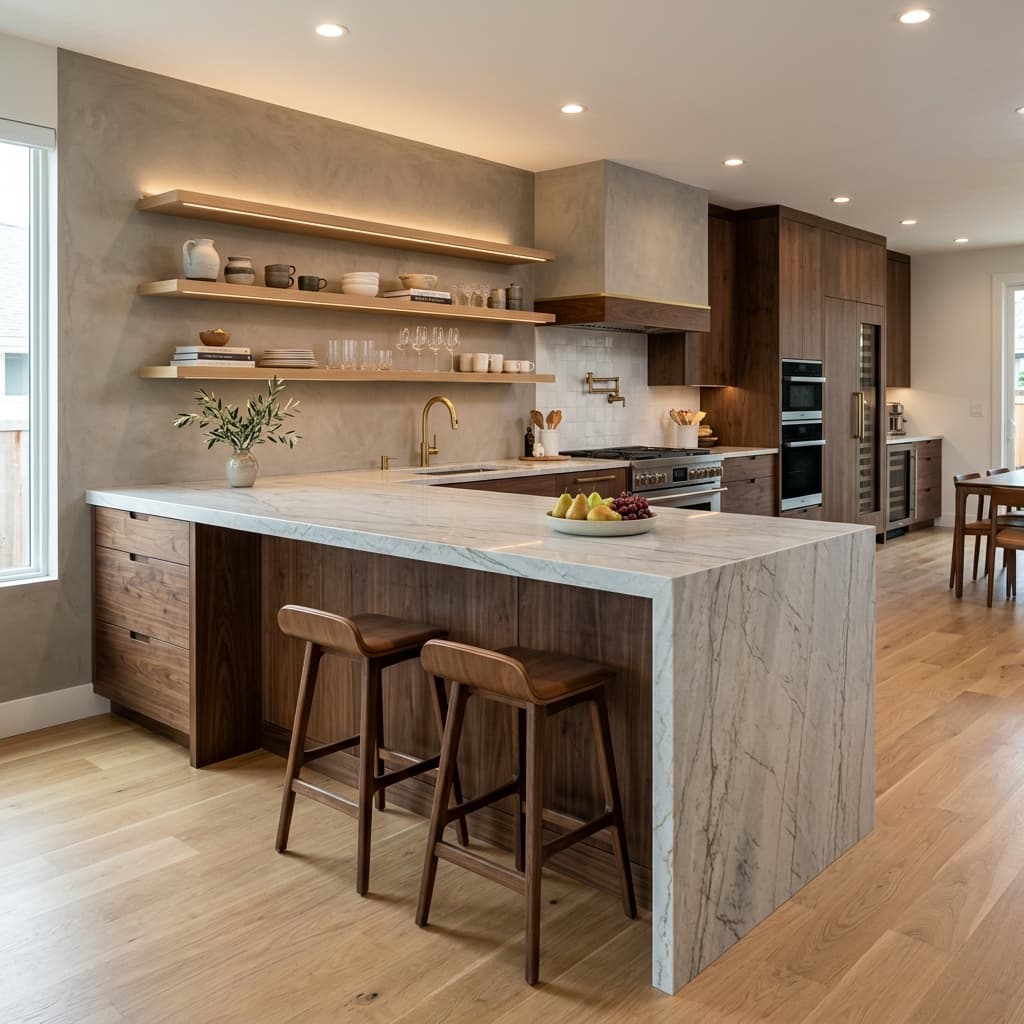
A kitchen island crowned with a four-inch hard-maple end-grain butcher block on a hand-painted base. A true work surface you can carve on for decades.
Guides
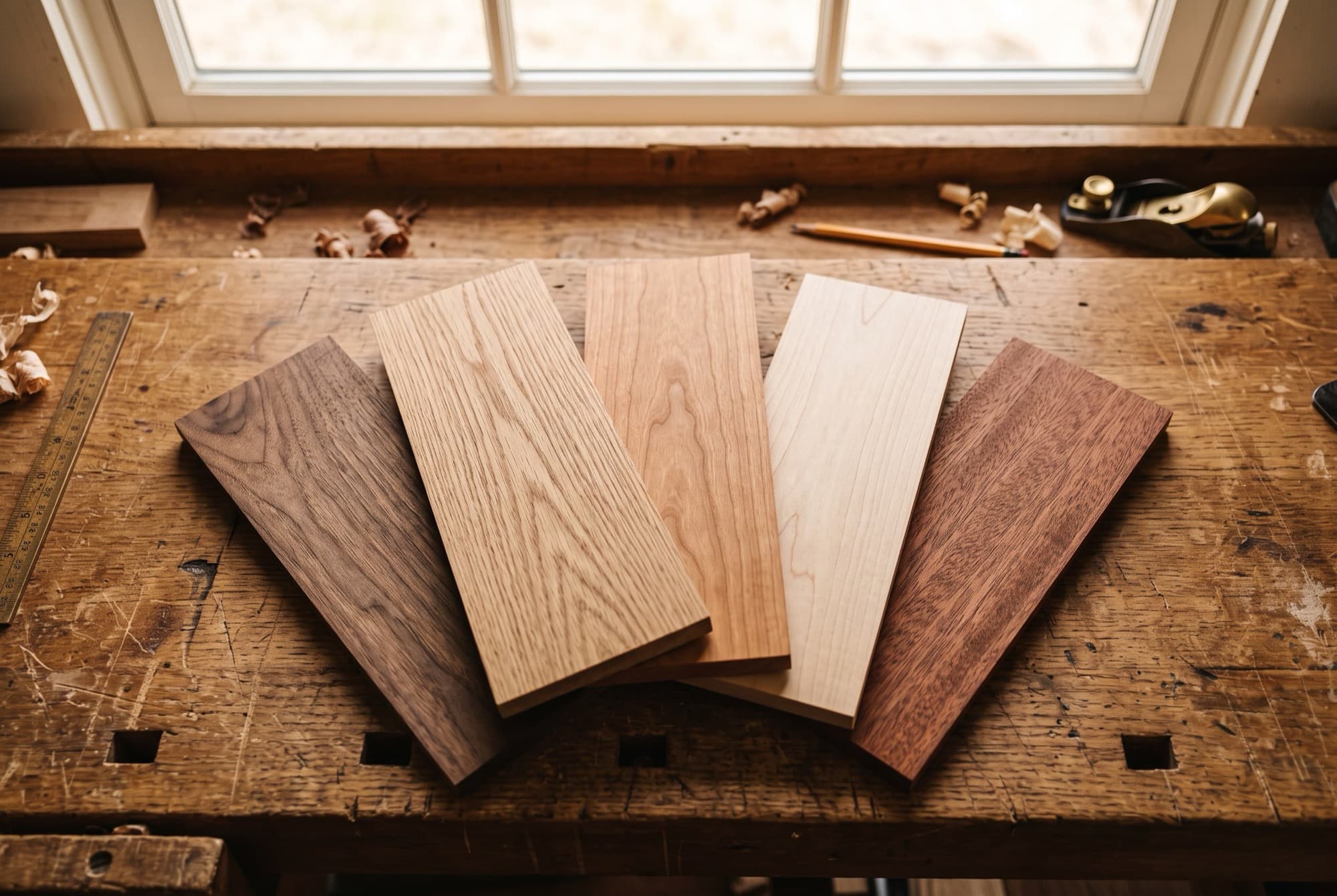
Walnut, oak, maple, or cherry? A working guide to hardness, wood movement, color over time, and honest cost per board foot, from the shop floor.
Build Logs
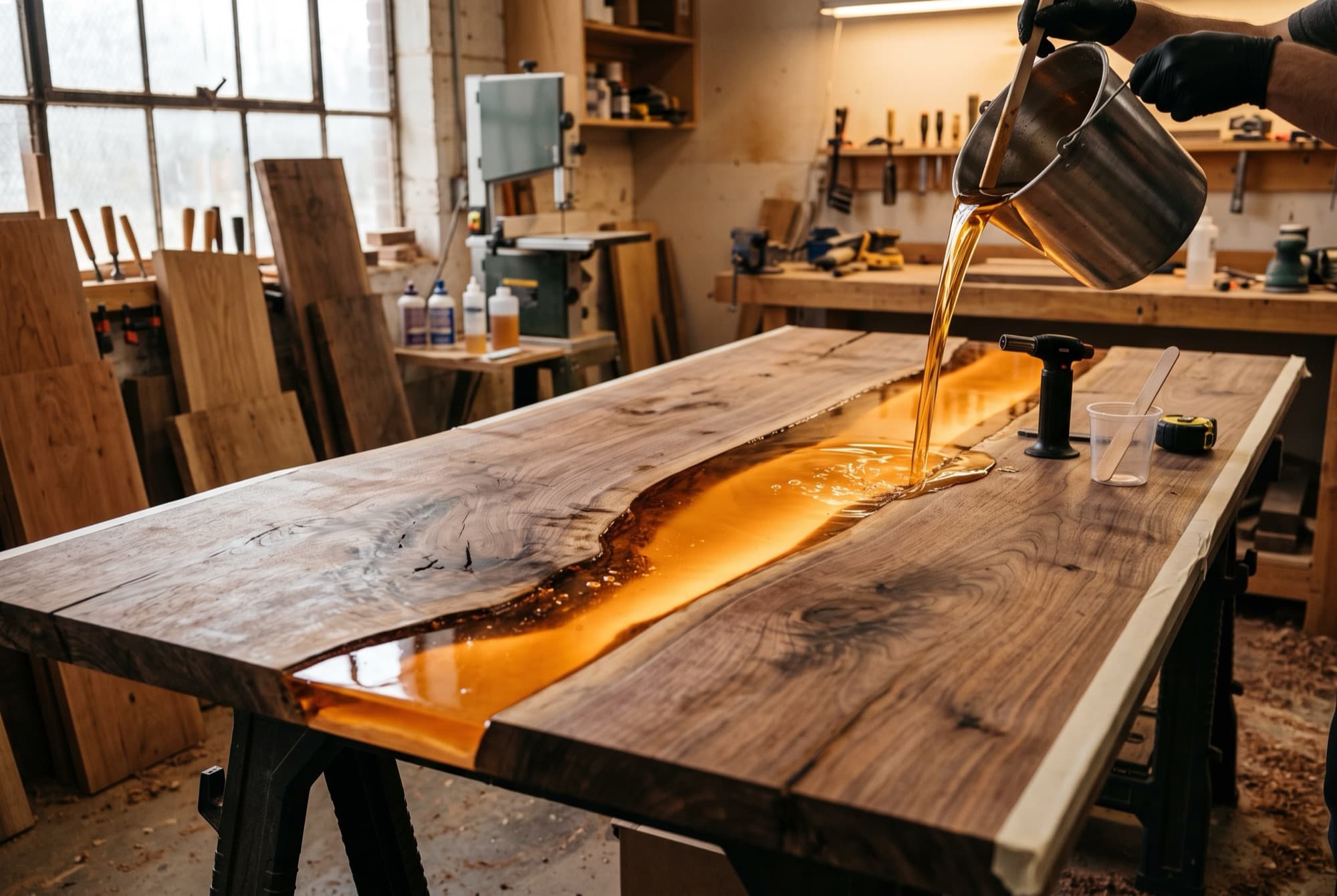
Slab to delivery on a nine-foot black walnut river table: sourcing, flattening, a three-lift epoxy pour, finishing, and getting 300 pounds through a door.
Craft
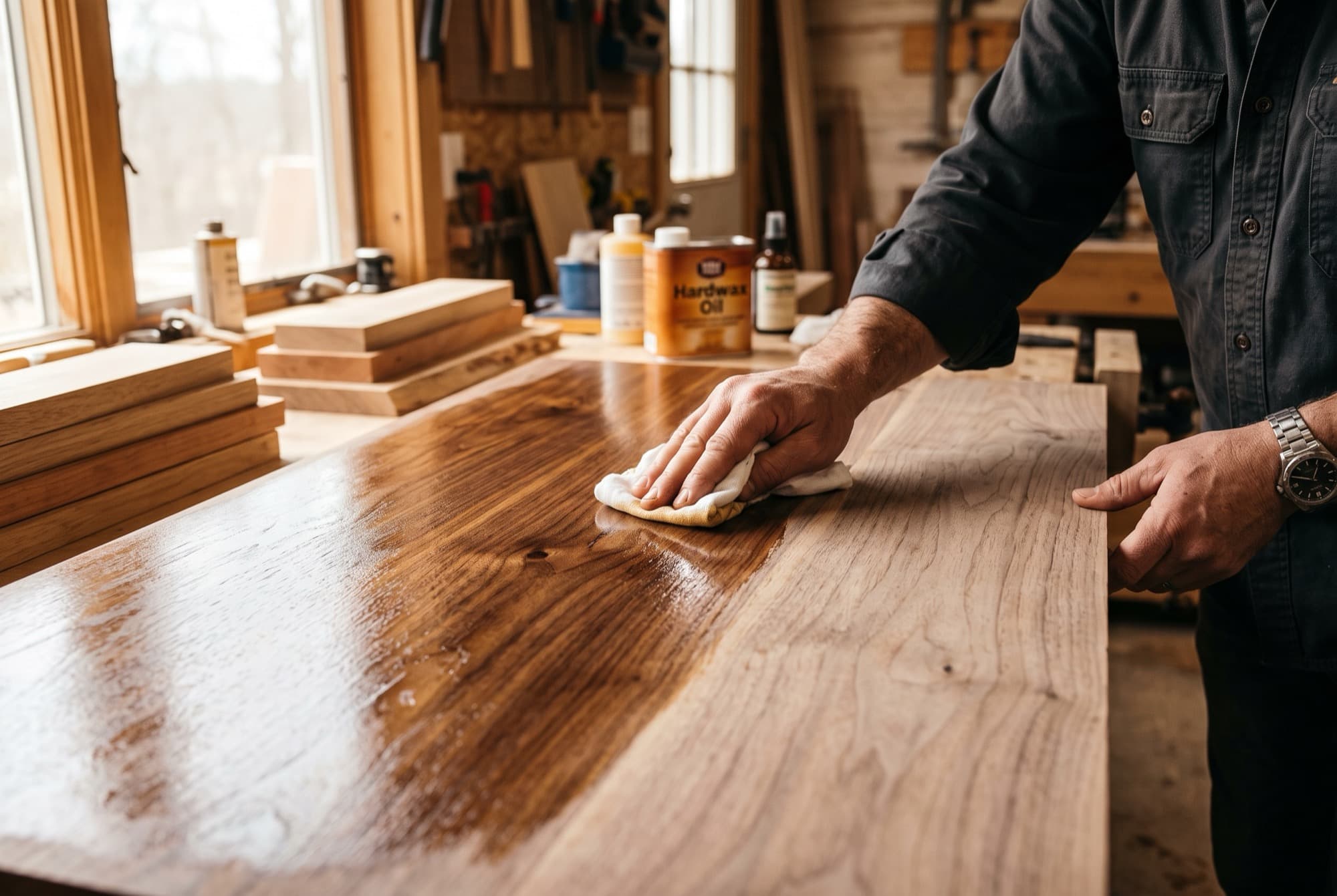
We standardized nearly every piece on hardwax oil instead of film finishes. Here is the honest case for it, the trade-offs, and how to live with it.
Start a commission
Tell us about the piece you're picturing. We'll reply within two business days with the wood, the approach, and a realistic timeline.