Specialty2026
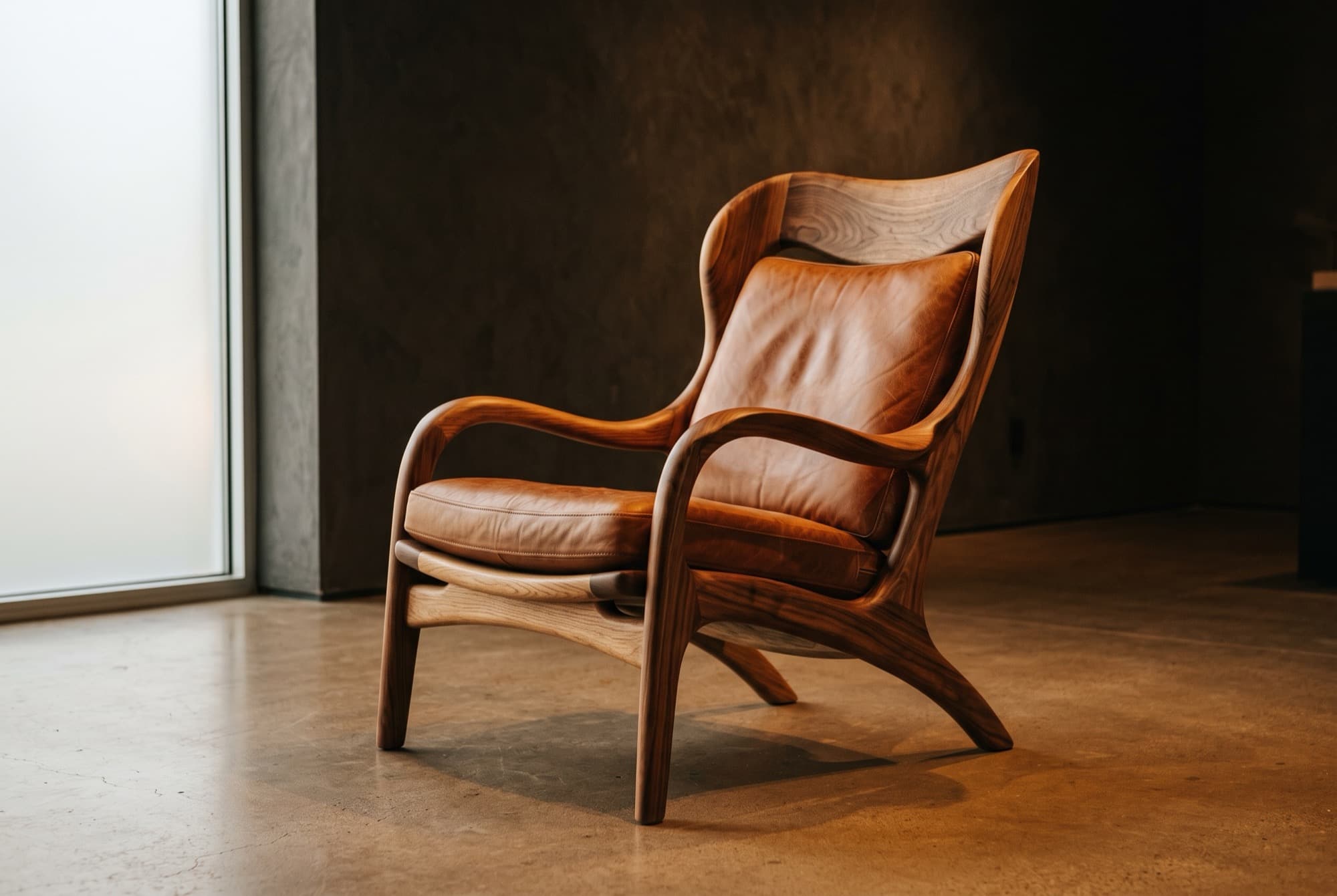
Sculpted Lounge Chair
A sculpted lounge chair hand-shaped from solid ash with wenge splines and a hand-woven wool seat.
- Materials
- Solid ash · Wenge splines · Hand-woven Danish wool cord · Hardwax oil
See the case study
Craft
There is a temptation, when you fall for Japanese woodworking, to cosplay it: to build a tea house in a suburb and call it authentic. We are not interested in that. What we take from the Japanese tradition is a set of ideas about how joints can carry a design rather than hide inside it, and a group of hand tools that do certain jobs better than any machine we own. Used honestly, in modern furniture, it produces pieces that feel quietly extraordinary without pretending to be something they are not.
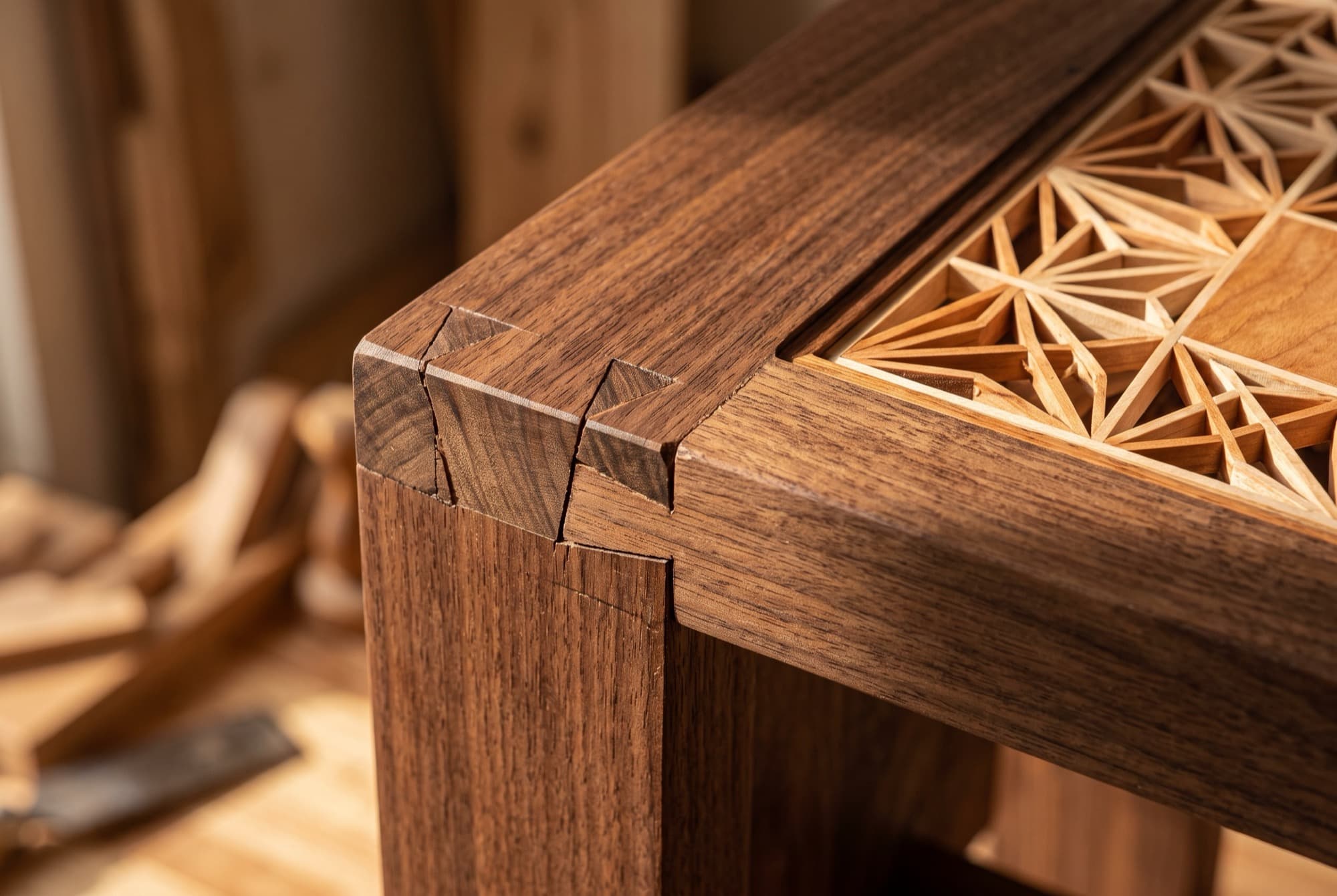
Western furniture, at its most refined, tends to hide its joinery. The dovetails are tucked where you will not see them, the tenons are buried, the mechanics of how the thing holds together are treated as backstage business. Japanese joinery frequently does the opposite. The joint is the ornament. A through-tenon wedged from the far side, a visible spline of contrasting wood, a housed dovetail that reads as a deliberate line across a leg, these announce how the piece is made and let that honesty be the decoration.
That idea travels beautifully into modern, minimal furniture, because minimalism starves a piece of ornament and then needs something true to look at. An exposed, perfectly fit joint gives the eye exactly that: a detail that is structural and beautiful at the same time, with nothing applied and nothing faked. On a clean-lined walnut bench or a white oak console, a row of crisp through-tenons or a single exposed bridle joint does more work than any carving or hardware could.
The most delicate thing we borrow is kumiko, the lattice work traditionally seen in shoji screens and transoms. Kumiko is built from thin strips of wood, often only a couple of millimeters thick, notched and fitted into geometric patterns entirely by friction and fit, with no fasteners and frequently no glue at the joints themselves. Done well, it is astonishing: a rigid, gossamer grid that turns a flat panel into something that plays with light and shadow all day.
We do not build shoji screens. We build kumiko into modern pieces where a panel wants to be more than a panel: the front of a cabinet, an inset in a headboard, a light-diffusing divider, the field of a coffee-table top under glass. The geometry, asa-no-ha and its relatives, is centuries old, but set into a contemporary walnut carcass with a warm light behind it, it reads as completely current. The craft is old. The application does not have to be.
The point of kumiko is not to prove you can do something fiddly. It is that a wall of tiny, precise wooden joints catches light in a way a solid panel never will, and that quality of light is the actual design.
We run a modern shop with a bandsaw, a jointer, a planer, and a domino machine, and we use them without guilt. Efficiency is not the enemy of craft. But there is a specific family of Japanese hand tools that we reach for constantly, because they do their jobs better than the powered alternative, not out of nostalgia.
The saws cut on the pull stroke. A ryoba (two edges, rip and crosscut) or a dozuki (a fine, stiff-backed saw) pulls the blade taut as it cuts, so it can be thinner, take a narrower kerf, and leave a cleaner face than a Western saw that has to be stiff enough to push. For fine joinery cuts, that clean, accurate kerf is a real advantage.
The chisels, nomi, are laminated: a thin layer of very hard, high-carbon steel forge-welded to a softer iron body. The hard steel takes and holds a frighteningly keen edge for paring and chopping precise joints; the soft back makes the tool tough rather than brittle and easier to sharpen. We keep them scary-sharp on waterstones, because the entire logic of exposed joinery is that every cut face is on display and has to be clean off the tool.
The plane, kanna, also pulls toward you, and in good hands it takes shavings you can read a newspaper through. On woods like walnut and cherry, a finish planed surface has a faint, burnished depth that no sandpaper reproduces. We do not hand-plane everything, that would be theater, but on the surfaces that matter most we finish with the kanna and let the difference show.
We are not building Japanese furniture. We are building modern furniture informed by Japanese thinking, and we are clear-eyed about which is which.
The tradition these come from is deep, and we respect it enough not to counterfeit it. What we do instead is let it change how we think: joints that tell the truth, surfaces finished by hand where it counts, and the patience to fit a thing so well it needs nothing else. Bring us a modern piece and we can weave that thinking through it in a way that feels less like a reference and more like the reason the piece feels the way it does.
No comments yet. Be the first to start the conversation!
From the portfolio
The commission this was written about, photographed and specced in full.
Craft
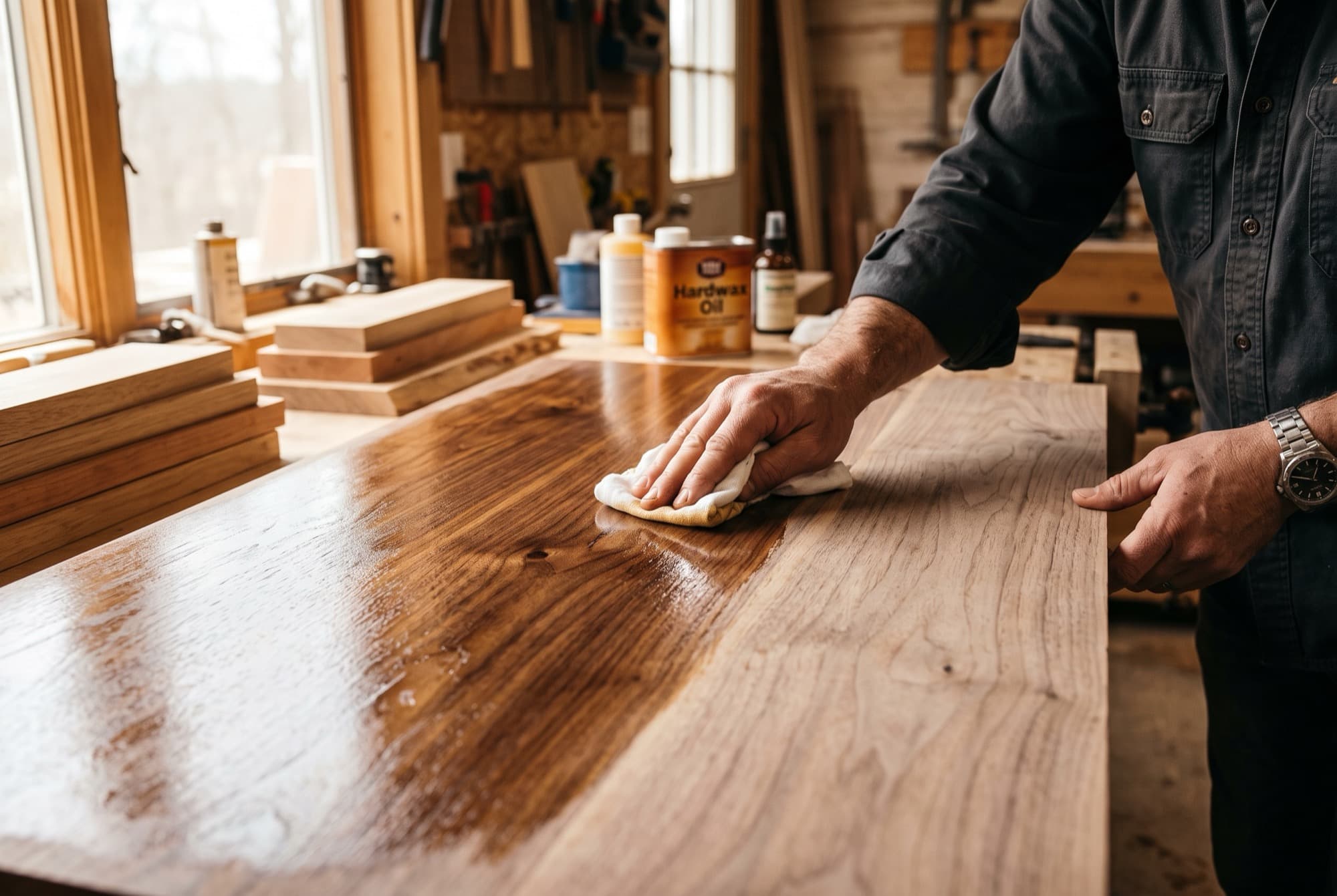
We standardized nearly every piece on hardwax oil instead of film finishes. Here is the honest case for it, the trade-offs, and how to live with it.
Build Logs
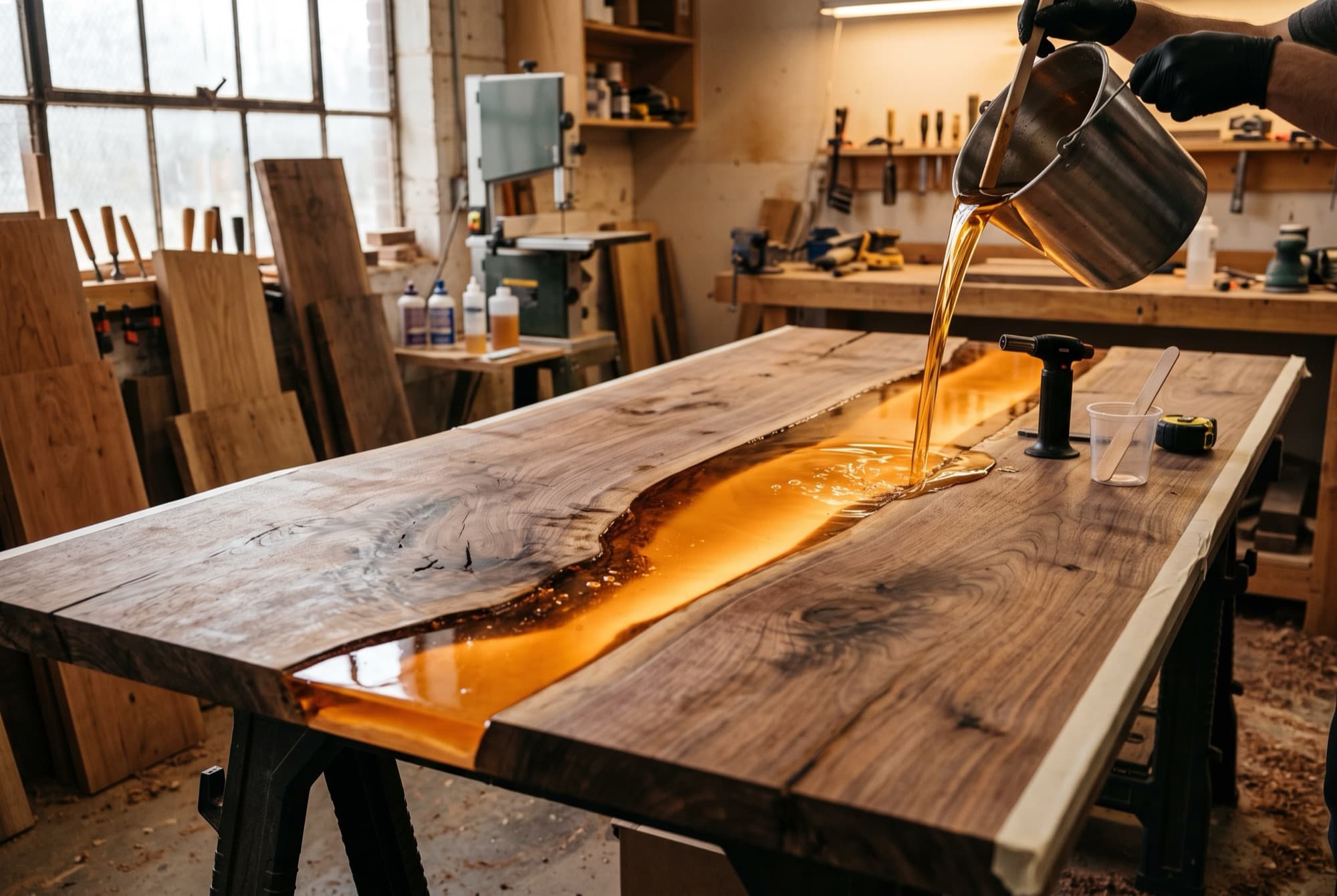
Slab to delivery on a nine-foot black walnut river table: sourcing, flattening, a three-lift epoxy pour, finishing, and getting 300 pounds through a door.
Guides
Real linear-foot ranges, what actually drives the number, and the honest cases where semi-custom is the smarter buy, from a shop that builds custom.
Start a commission
Tell us about the piece you're picturing. We'll reply within two business days with the wood, the approach, and a realistic timeline.